- The keyboard Fault Ledger: Match the Symptom First
- Why is My Keyboard Not Working on Laptop? 11 Reasons
- Debris beneath the keys
- Liquid damage
- Damaged key mechanism or keyboard matrix
- Loose or damaged internal ribbon cable
- Swollen battery
- Embedded controller or firmware fault
- Driver corruption and Windows Update conflicts
- Accessibility settings
- Wrong keyboard layout
- Fn Lock, Num Lock, and manufacturer hotkey modes
- App conflict
- 17 Ways to Fix a Laptop Keyboard That Won’t Work or Type
- 1. Protect the Laptop from Liquid or Battery Damage
- 2. Perform a Proper Restart and Power Cycle
- 3. Arrange Temporary Input Before Advanced Troubleshooting
- 4. Unplug Docks, Receivers, and Other Connected Peripherals
- 5. Check If the Keyboard Works Before the OS Starts
- 6. Run the Laptop Manufacturer’s Keyboard Diagnostic
- 7. Clean Around Unresponsive or Sticking Keys
- 8. Turn Off Accessibility Options That Delay or Redirect Keys
- 9. Correct the Language, Input Layout, and Lock-Key State
- 10. Investigate If Only One Application is Affected
- 11. Install Operating System and Manufacturer Updates
- 12. Reinstall or Roll Back the Keyboard Driver
- 13. Repair Manufacturer Hotkey and System-Interface Software
- 14. Reset Chromebook Keyboard Hardware
- 15. Test Windows in Safe Mode or With a Clean Boot
- 16. Use Recovery Only When the Timing Supports It
- 17. Repair or Replace the Keyboard Assembly
- How to Fix Dell Laptop Keyboard Not Working
- How this Guide was Checked
- Frequently Asked Questions
- Why is my laptop keyboard not working but the mouse is?
- Can a malware infection disable my built-in laptop keyboard?
- Why does my keyboard type numbers instead of letters?
- Why must I hold a key before it appears?
- Why is my laptop keyboard typing by itself?
- Can overheating cause a laptop keyboard to stop working?
- Can I use an external keyboard permanently?
- Is it safe to remove a laptop keycap?
- Should I update the BIOS to fix the keyboard?
- How much does laptop keyboard repair involve?
- Sources
A laptop keyboard that suddenly stops working or typing can be caused by something as simple as a stuck accessibility setting or Windows driver, or by a failed keyboard, loose ribbon cable, liquid damage, or motherboard fault. You can pinpoint the cause by testing the keys before Windows loads.
If the keyboard works in the BIOS or startup menu but not in normal Windows, the issue is with the drivers or software. If it doesn’t work there either, it’s likely a hardware problem. A row of dead keys usually means something different from letters producing the wrong symbols.
The keyboard Fault Ledger: Match the Symptom First
| Symptom | Most likely causes | First checks |
|---|---|---|
| No keys respond | Loose internal cable, controller lockup, liquid damage, driver failure, depleted battery | Restart, external keyboard, BIOS or diagnostics test |
| Many neighbor keys are dead | Debris, liquid residue, damaged keyboard matrix or ribbon cable | Clean safely, test outside the operating system |
| One key sticks or repeats | Debris, damaged key mechanism, repeat-delay setting | Clean the key area, check repeat settings |
| Wrong letters or symbols appear | Incorrect language or keyboard layout, Num Lock, remapping software | Verify input layout and lock keys |
| Keys respond only after being held | Filter Keys or Slow Keys | Disable accessibility delay settings |
| Function keys control the wrong feature | Fn Lock or firmware hotkey mode | Press the Fn Lock combination or check firmware settings |
| Keyboard works in BIOS but not Windows | Driver, update, utility, accessibility setting or software conflict | Safe Mode, driver reinstall, updates |
| External keyboard works; built-in keyboard does not | Internal keyboard, ribbon cable or embedded-controller problem | OEM diagnostics and repair |
| Keyboard and touchpad fail together | Shared cable, controller, firmware or mainboard problem | Full shutdown, diagnostics, service |
| Problem began after a spill | Electrical damage, corrosion or conductive residue | Power off and disconnect immediately |
| Palm rest or keyboard is lifting | Swollen battery beneath the keyboard | Stop using the laptop and arrange service |
Shut the laptop down, disconnect its charger, and remove external devices. Do not keep pressing keys to “test” a wet keyboard. Do not charge a laptop with visible swelling, a raised trackpad, separated case seams, or a bowed keyboard deck. HP recommends to stop using a device with a swollen battery, and Dell advises turning off your machine and unplugging it immediately after a spill.
Related: Why is My Laptop Fan So Loud? 10 Reasons and Fixes
Why is My Keyboard Not Working on Laptop? 11 Reasons
Debris beneath the keys
Dust, hair, or crumbs can jam the scissor mechanism or block a key from returning to its normal position. This usually affects one or two keys rather than the whole keyboard.
Liquid damage
Sugary drinks like coffee or soda leave behind sticky, conductive residue that can short the membrane layer beneath the keys or corrode the connector once dry. Keys might fail or repeat commands days after a spill, even if the keyboard worked fine at first.
Damaged key mechanism or keyboard matrix
Laptop keyboards arrange keys in an electrical grid. Damage to one trace can disable a group of keys that share a row or column. Multiple dead keys in one area is a clear sign of a physical hardware break.
Loose or damaged internal ribbon cable
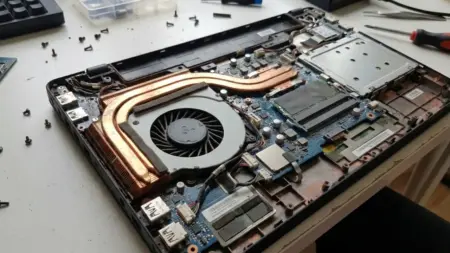
The keyboard connects to the motherboard through a flat ribbon cable and a small connector called a ZIF (zero insertion force) socket. Impact, previous repair work, hinge-area stress, or an improperly closed connector can interrupt the complete keyboard. It’s a common cause after a laptop has been opened for a battery or RAM upgrade.
Swollen battery
Most often, laptop batteries are placed right under the palm rest or keyboard. Swelling can distort the chassis, change key travel, lift the trackpad, or place pressure on internal cables.
Embedded controller or firmware fault
The embedded controller oversees the machine’s nervous system: keyboard input, power delivery, and thermal regulation. When this controller is locked, it can disable the keyboard before the operating system loads. Firmware updates are the standard remedy for these failures, though they carry a permanent risk because a corrupted or interrupted BIOS flash can render a computer unbootable.
Driver corruption and Windows Update conflicts
Windows operates the built-in keyboard by the Standard PS/2 Keyboard or HID Keyboard Device driver, though it might also depend on the laptop maker’s chipset, serial I/O, hotkey, or system-interface packages. A botched Windows Update, an incompatible driver rolled out through system update, or a conflict introduced by installing other input hardware (a graphics tablet, a game controller) can leave that driver in a broken state. This is, by a wide margin, the most common cause reported across support forums for Windows 10 and Windows 11 machines.
Accessibility settings
Windows Filter Keys can discard brief or repeated presses, macOS Slow Keys delays acceptance until a key is held for a set duration, and Mouse Keys might even turn the number pad into a mouse pointer. These features are good when enabled deliberately but confusing when triggered by an accidental shortcut.
Wrong keyboard layout
A US keyboard interpreted as UK, French, German, or another layout produces unexpected punctuation and symbols even though the hardware works correctly. If your computer thinks you are using a different keyboard layout, keys like @, ", Z, Y and others will type the wrong characters. Your hardware is fine, but the software processes the input incorrectly.
Fn Lock, Num Lock, and manufacturer hotkey modes
Compact keyboards frequently place a numeric keypad over letter keys, and Function (Fn) Lock can reverse the behavior of the top row. Many laptops, including Dell, HP, and Lenovo, have a function-key lock that swaps the top row between F1–F12 behavior and media/brightness controls. If Fn Lock is toggled, keys can appear to “not work” when they’re mapped to a different action than expected.
App conflict
Software can sometimes get in the way of your keystrokes. This happens with gaming utilities, remote-desktop software, keyboard remappers, automation apps, and security software. If your keyboard only fails in one program but works everywhere else, the problem is almost certainly related to software, not a hardware defect.
Now, let’s go through the troubleshooting steps to get your laptop keyboard back to working again.
17 Ways to Fix a Laptop Keyboard That Won’t Work or Type
Try these troubleshooting steps in order so the results can point you toward a software or hardware fix. Do not remove keycaps, open the chassis, or update firmware right away—save the more invasive steps for later if nothing else works.
1. Protect the Laptop from Liquid or Battery Damage
A recent spill can change the full repair order.
- Shut down the laptop immediately.
- Disconnect the charger, dock, and all peripherals.
- Remove the battery only when it is externally removable and can be released without tools.
- Blot visible liquid with a lint-free cloth.
- Keep the laptop powered off and arrange an internal inspection, particularly after sugary, acidic or milky liquids.
Do not use a hair dryer, oven, radiator, or direct sunlight. Heat can deform plastics, damage the display, and force moisture farther into the assembly. Rice does not remove residue from switches or connectors.
For a swollen battery, never press the case closed or puncture the battery. Move the laptop away from flammable material and contact the manufacturer or a qualified repair provider.
“It dried and started working” is not a clean bill of health. Residue can keep corroding keyboard traces and mainboard components after the visible moisture disappears.
2. Perform a Proper Restart and Power Cycle
A restart clears an input service or embedded controller lockup. A sleep/wake cycle and a restart are not the same thing on modern Windows laptops — sleep doesn’t completely reload drivers, and even a normal reboot can be short-circuited by Fast Startup.
- Windows: Click Start > Power > Restart. A restart is usually better than a standard shutdown because Windows “Fast Startup” often keeps the system state as it was, which might carry the glitch over to your new session. When the pointer works but the keyboard does not, use the touchpad to restart. When neither works, hold the power button only as a last resort, but unsaved work will be lost after a power cycle.
- Mac: Click Apple menu > Restart. When macOS does not respond, hold the power or Touch ID button until the Mac turns off, wait 10–15 seconds, then turn on again.
- Chromebook: Select the status area, choose Power, wait for shutdown, and restart. Reserve the Chromebook hardware reset in Fix 14 for later.
3. Arrange Temporary Input Before Advanced Troubleshooting
An external USB keyboard is the most dependable workaround because it does not require Bluetooth pairing.
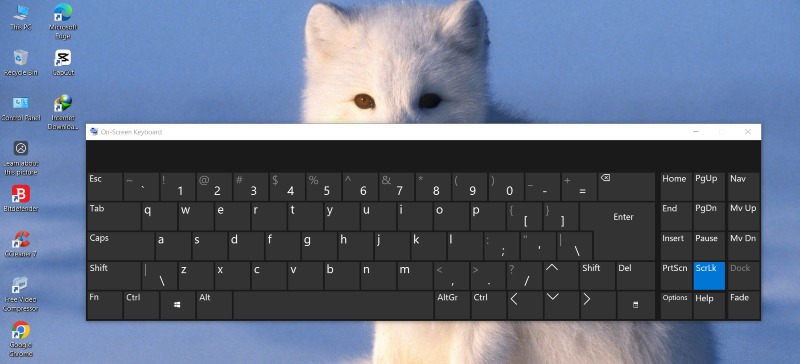
Windows On-Screen Keyboard
- At the sign-in screen, select Accessibility and turn on On-Screen Keyboard.
- From the desktop, open Settings > Accessibility > Keyboard > On-Screen Keyboard.
- The shortcut Windows + Ctrl + O toggles it when some keys still respond.
macOS Keyboard Viewer
- Open System Settings > Keyboard > Text Input > Edit.
- Enable Show Input menu in menu bar, open that menu, and choose Show Keyboard Viewer. Apple also recommends Keyboard Viewer when the physical keyboard is unreliable.
Chromebook on-screen keyboard
- Open Settings > Accessibility > Cursor and touchpad > On-screen keyboard.
- Menu wording can vary slightly between ChromeOS releases and managed devices.
An external keyboard working does not prove that the operating system is faultless, but it narrows down the issue to the integrated keyboard, its cable, firmware, or a device driver.
4. Unplug Docks, Receivers, and Other Connected Peripherals
Disconnect USB hubs, docking stations, external monitors, game controllers, wireless keyboard receivers, storage drives, KVM switches, smart card readers, and any Bluetooth accessories you don’t need.
Restart the laptop with only the power cable attached. A faulty USB device, dock firmware issue, or key remapping tool can interfere with input enumeration. If you’re using an external keyboard, plug it into a different USB port, skip the hub, make sure it has power, and try it on another system.
5. Check If the Keyboard Works Before the OS Starts
Restart your laptop, then immediately press the manufacturer’s setup or diagnostic key during startup. While common keys are F2, F10, F12, Esc, and Delete, the correct one depends on the laptop model.
Possible outcomes:
- The keyboard works in BIOS, UEFI or preboot diagnostics: Switches, cable, and controller can communicate at a basic level. Focus your troubleshooting on drivers, software, or OS settings instead.
- No keys work before the OS loads: Hardware, firmware, cable or controller failure is more possible.
- Only certain keys fail in both places: The keyboard assembly is the leading suspect.
- The preboot menu cannot be opened with the built-in keyboard but opens with USB: The internal keyboard path requires service.
If you cannot open the Startup Menu with the integrated keyboard, the unit needs service or a total replacement.
Leave your BIOS settings as it is during testing. If you do change anything, write it down before you exit firmware setup.
6. Run the Laptop Manufacturer’s Keyboard Diagnostic
If you can run an OEM diagnostic tool during startup, it might generate an error code you can use to verify hardware failure and expedite your warranty claim.
- Dell: Run the SupportAssist keyboard test or the preboot diagnostics available via the F12 menu.
- HP: Open HP PC Hardware Diagnostics > Device Check > Input Devices > Keyboard Test.
- Lenovo: Use Lenovo Vantage hardware scan or the model’s UEFI diagnostics.
- ASUS, Acer and MSI: Use the diagnostic or system-check utility supplied for the exact model.
- Chromebook: In Settings, type
diagnosticsin the search bar, then click Diagnostics > Input > The internal keyboard. Google documents keyboard testing in the ChromeOS Diagnostics app. - Mac: Use Apple Diagnostics.
Apple Diagnostics on Macs
For an Apple-silicon Mac:
- Shut down.
- Press and hold the power button until startup options appear.
- Release the button.
- Hold Command-D until diagnostics starts.
On a MacBook with an Intel chipset, turn the machine on and immediately hold D. If the D key doesn’t work, press and hold Option (⌥)-D at startup instead. macOS Tahoe 26 and later include a diagnostic tool that can be accessed using these commands.
Record the error code or take a photo of the result. A failed hardware test provides better proof for support teams than a general statement.
7. Clean Around Unresponsive or Sticking Keys
Shut down the laptop and unplug the charger.
- Hold the laptop at an angle that allows loosened debris to fall outward.
- Clean around the keys with a soft brush or use short bursts of compressed air.
- Keep the can upright so propellant is not sprayed onto the keyboard.
- Wipe key surfaces with a lightly damp microfiber cloth.
- Let everything dry first, then turn the laptop back on.
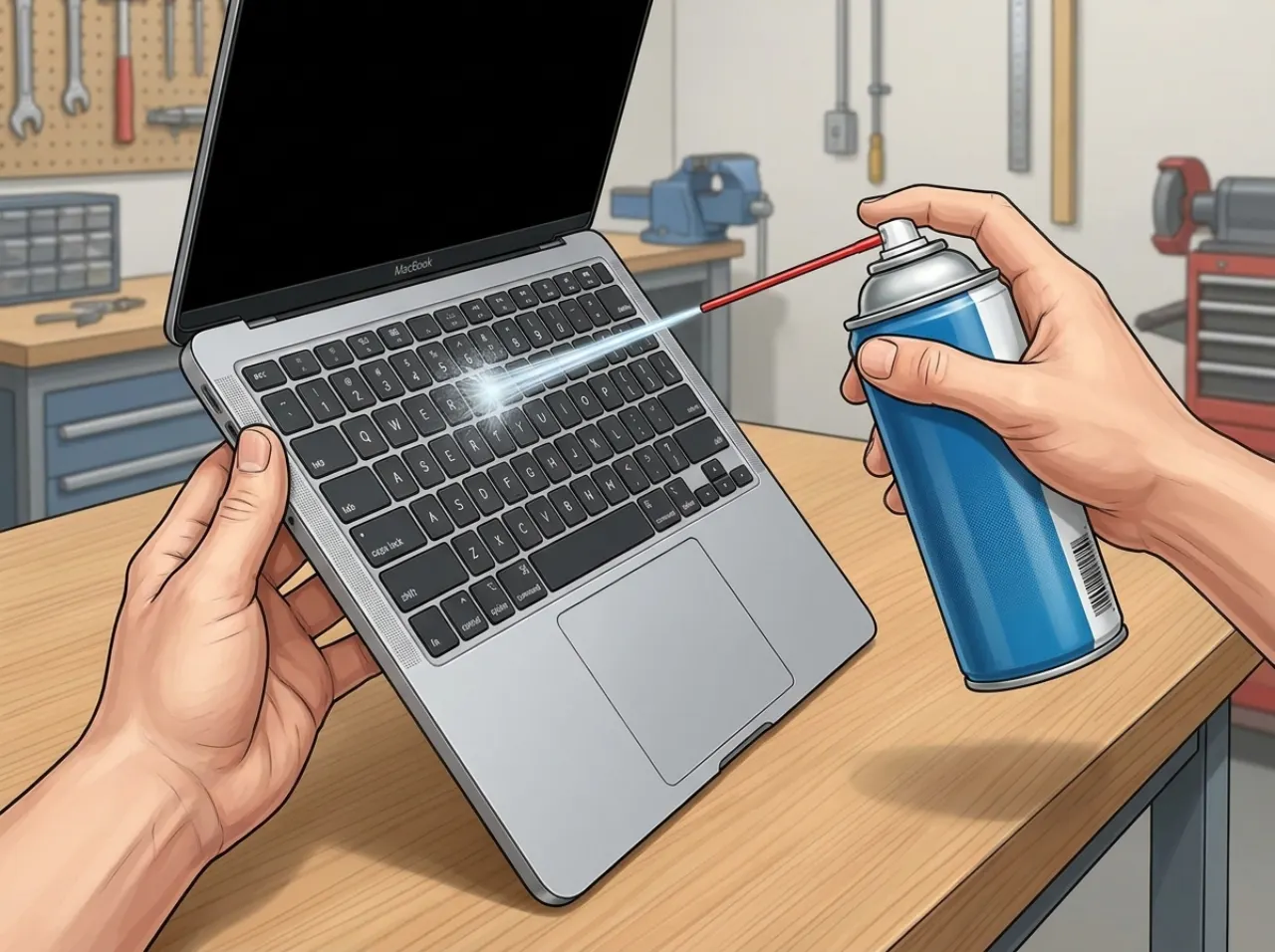
For a MacBook, hold it at about a 75-degree angle. Keep the nozzle about half an inch from the keyboard and spray from left to right. Rotate the notebook to each side and repeat.
Don’t soak the keyboard with alcohol or cleaning solution. Don’t blast compressed air under a loose keycap. Leave keycap removal alone unless the manufacturer says it’s safe because laptop scissor clips are easy to break and differ by model.
One rough or sticky key points to debris. A full row or column of dead keys usually means an electrical issue. Cleaning can fix the first problem but rarely the second.
8. Turn Off Accessibility Options That Delay or Redirect Keys
Windows 11
- Open Settings > Accessibility > Keyboard.
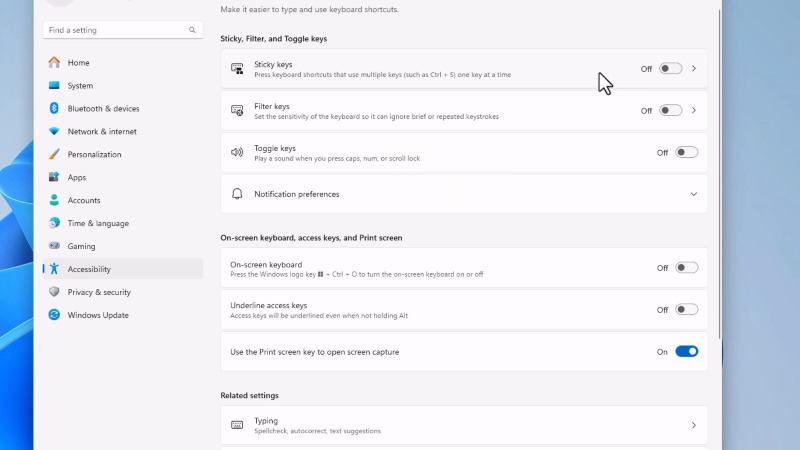
- Turn off Sticky Keys, Filter Keys, and Toggle Keys.
- Uncheck “Allow the shortcut key to start Filter Keys” so you don’t accidentally toggle on this accessibility feature by holding down the right Shift key during long typing sessions.
Filter Keys is often the reason brief presses are ignored, or letters appear only after a key is held. Holding the right Shift key for 8 seconds can toggle Filter Keys, so it sometimes activates accidentally. Also disable the keyboard shortcut for the feature until troubleshooting is complete.
macOS Tahoe 26
- Open System Settings > Accessibility > Keyboard.
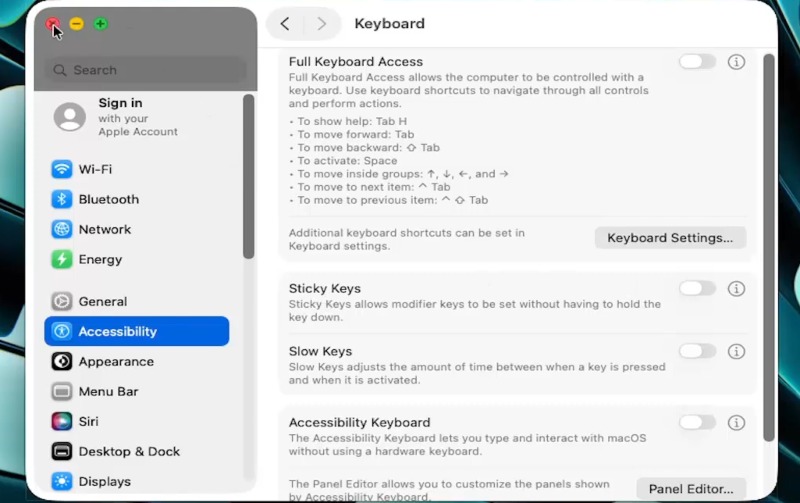
- Turn off Sticky Keys and Slow Keys.
- Next, go to System Settings > Accessibility > Pointer Control.
- Turn off Mouse Keys. Apple recommends checking both settings if key presses are not responding correctly.
Chromebook
- Open Settings > Accessibility > Keyboard and text input.
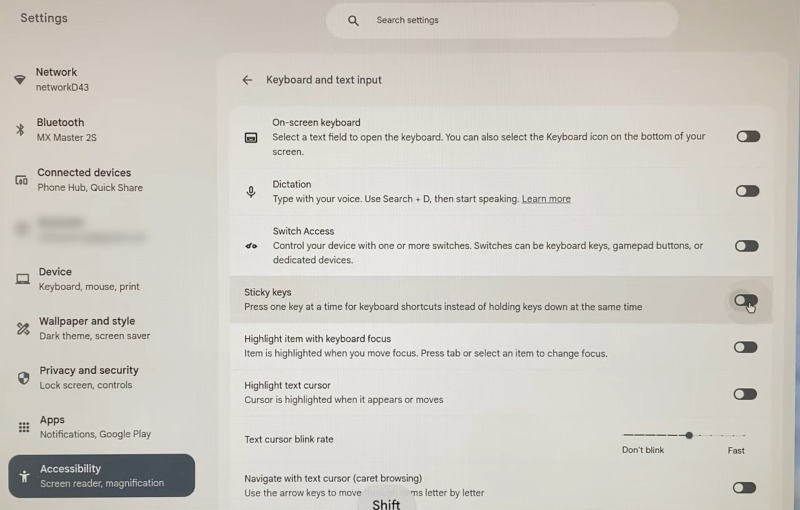
- Review Sticky Keys, on-screen keyboard, dictation, and related options.
If typing is delayed or some key presses seem not to work, Filter Keys is probably the culprit.
9. Correct the Language, Input Layout, and Lock-Key State
Windows 11
- Go to Settings > Time & language > Language & region.
- Select the language’s More options button, open Language options, and inspect the installed keyboards.
- Confirm the keyboard layout aligns with your physical keyboard (for example, QWERTY US rather than a UK or International layout, which changes the position for symbols like @, “, and #).
- Remove any duplicate or incorrect keyboard layouts that may have been added automatically.
Press Windows + Space to switch between installed input methods. It’s easy to trigger unintentionally, which can change punctuation.
macOS
- Open System Settings > Keyboard > Text Input > Edit.
- Make sure that the input source matches the physical key legends. Use the Input menu to change sources or remove unnecessary layouts.
Chromebook
- Click Settings > Device > Keyboard > Input settings.
- Confirm the language and input method.
Also check:
- Num Lock: May convert letter keys into numbers on compact keyboards.
- Caps Lock: Changes letter case, not symbol mapping.
- Fn Lock: Commonly toggled with Fn + Esc, but the combination varies.
- F1–F12 mode: Likely controlled by a key combination, manufacturer utility, or BIOS option.
This fix addresses keyboards that register inputs but output the wrong characters. It is a different mechanical failure from unresponsive keys, though the two are frequently conflated in support logs.
10. Investigate If Only One Application is Affected
- Open a simple text editor.
- Use Notepad on Windows, TextEdit on macOS, or a new text field or Google Docs document on ChromeOS.
- Try every key that’s giving you trouble. Then test again on the sign-in screen or in a different app.
When the problem happens in one program:
- Close and reopen it.
- Disable its extensions, plug-ins, and custom shortcuts.
- Reset its keyboard mappings.
- Update or reinstall the application.
- Check remote desktop or virtual machine keyboard settings.
- Exit macro, gaming, clipboard, and remapping software.
Browser problems should also be tested in a private window and another browser to separate extension interference from a system wide keyboard issue.
11. Install Operating System and Manufacturer Updates
Updates can fix input service, firmware, and compatibility problems.
Windows 11
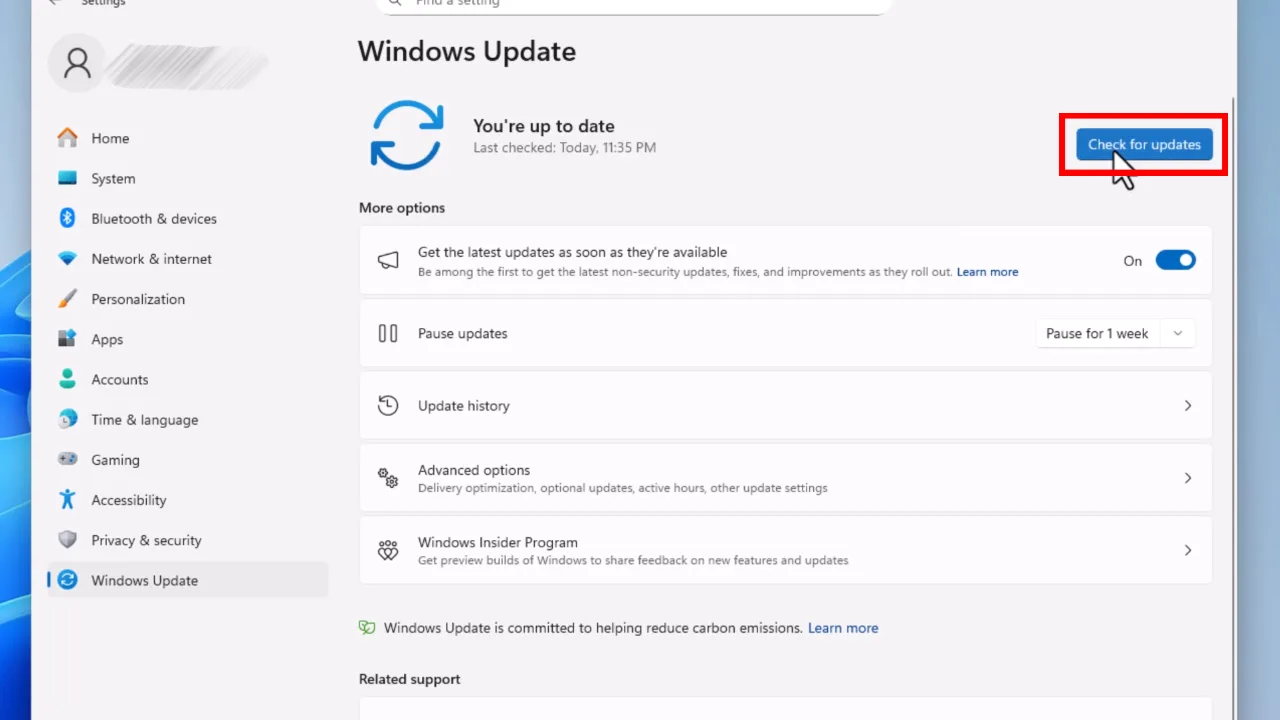
- Open Settings > Windows Update > Check for updates.
- Install current cumulative updates and check Advanced options > Optional updates for relevant driver packages. Then use the laptop manufacturer’s support page or update utility to install the model’s:
- Chipset drivers
- Serial I/O drivers
- Human-interface or hotkey packages
- System-interface frameworks
- Embedded controller updates
- BIOS or UEFI updates
- Stick to Microsoft or the laptop maker’s official download service and avoid drivers from third-party sites.
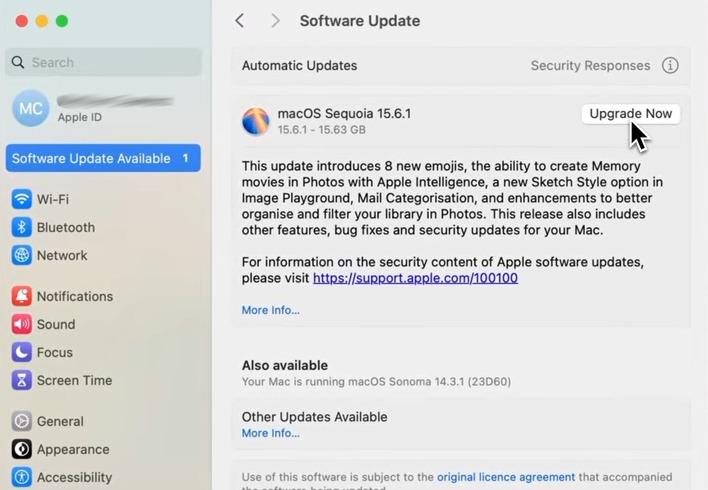
macOS
- Go to System Settings > General > Software Update.
- Click Update Now (or Upgrade Now) after you have backed up your data.
Chromebook
- Open Settings > About ChromeOS > Check for updates.
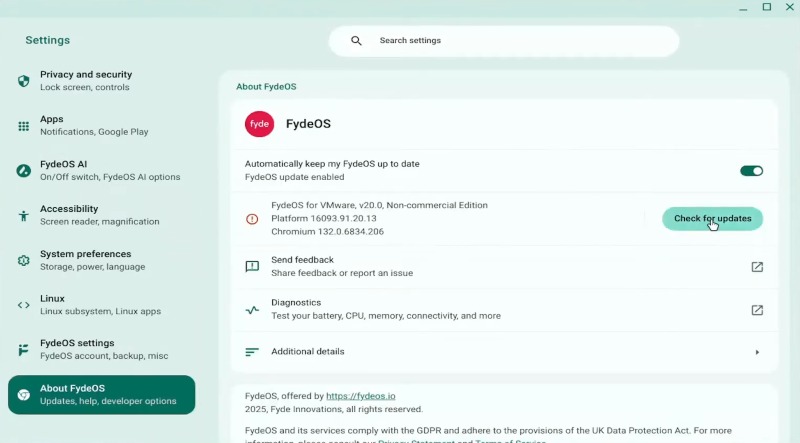
ChromeOS distributes system and firmware components together; managed school or business Chromebooks may restrict update and reset controls.
Connect the approved charger, close other programs, suspend BitLocker only if the manufacturer tells you to, and do not interrupt a BIOS update. Double check the exact laptop model and revision before downloading any firmware.
12. Reinstall or Roll Back the Keyboard Driver
- Right-click Start and open Device Manager.
- Expand Keyboards.
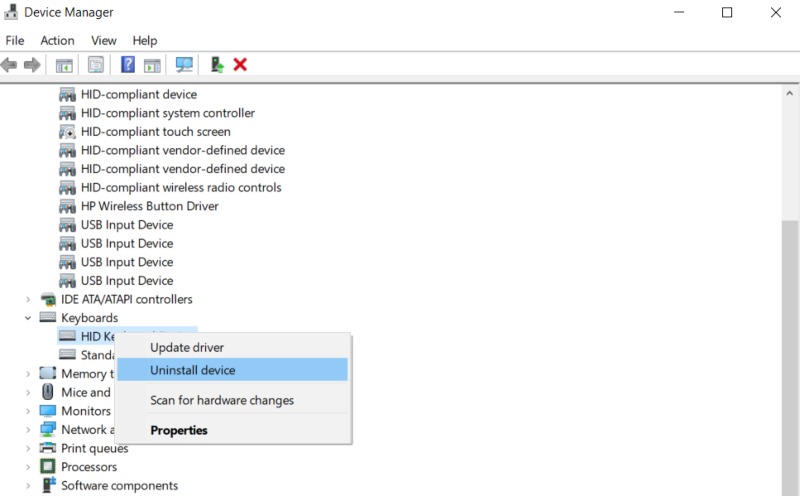
- Right-click Standard PS/2 Keyboard (or I2C HID Device / vendor-specific keyboard interface) and select Uninstall device.
- If a prompt appears asking to remove driver software, leave it unchecked and click Uninstall.
- Expand Human Interface Devices (HID) and check for yellow exclamation marks over I2C/HID controller entries.
- Restart the laptop.
Windows will perform a hardware scan upon boot, then will rebuild the input stack and bind clean driver files.
When the trouble began right after a driver update:
- Open Device Manager > Keyboards.
- Right-click the keyboard device, select Properties.
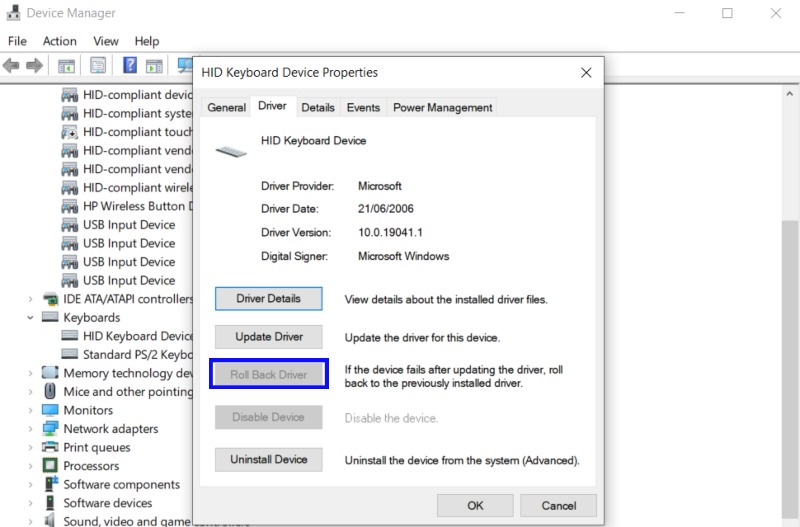
- Open the Driver tab. If Roll Back Driver is available (grayed out means no previous version is stored), select it and confirm.
- Restart with a full shutdown, not a quick restart.
Do not delete a driver package unless the maker’s instructions require it and you already have a replacement ready.
13. Repair Manufacturer Hotkey and System-Interface Software
If your laptop’s brightness, volume, microphone, airplane‑mode, or back‑light keys don’t work, a generic keyboard driver will not fix it. You need a driver that is compatible with the exact model.
Depending on the brand, search the official support page for packages described as:
- Hotkey support
- Function-key utility
- System event utility
- System interface foundation
- Control center
- Keyboard firmware
- HID event filter
- Serial I/O or chipset driver
Make sure the file you pick matches the laptop’s serial number or model identifier. Remove any legacy hotkey utilities flagged by the vendor as conflicting before the new installation.
To reverse top row behavior, inspect the firmware for settings labeled Action Keys Mode, Hotkey Mode, Function Key Behavior or Special Function Mode.
14. Reset Chromebook Keyboard Hardware
A hardware reset on a Chromebook cycles the low-level components that drive the keyboard and touchpad. It is not the same as a Powerwash, but Google warns that some files in the Downloads folder may get removed.
For most Chrome OS devices:
- Turn the Chromebook off.
- Hold the Refresh key.
- Press Power.
- Release Refresh when the Chromebook starts.
Certain models have a dedicated reset button or a different power‑button pattern, so consult the Google support page or the device’s manual before trying something else. Avoid performing a Powerwash on your Chromebook as an early troubleshooting step; it will erase your local data and is ineffective against a broken switch, loose ribbon cable, or damaged keyboard matrix.
15. Test Windows in Safe Mode or With a Clean Boot
When you boot Windows in Safe Mode, it only loads a limited set of drivers and services.
From Windows 11:
- Open Settings > System > Recovery.
- Under Advanced startup, select Restart now.
- Choose Troubleshoot > Advanced options > Startup Settings > Restart.
- Select Enable Safe Mode.
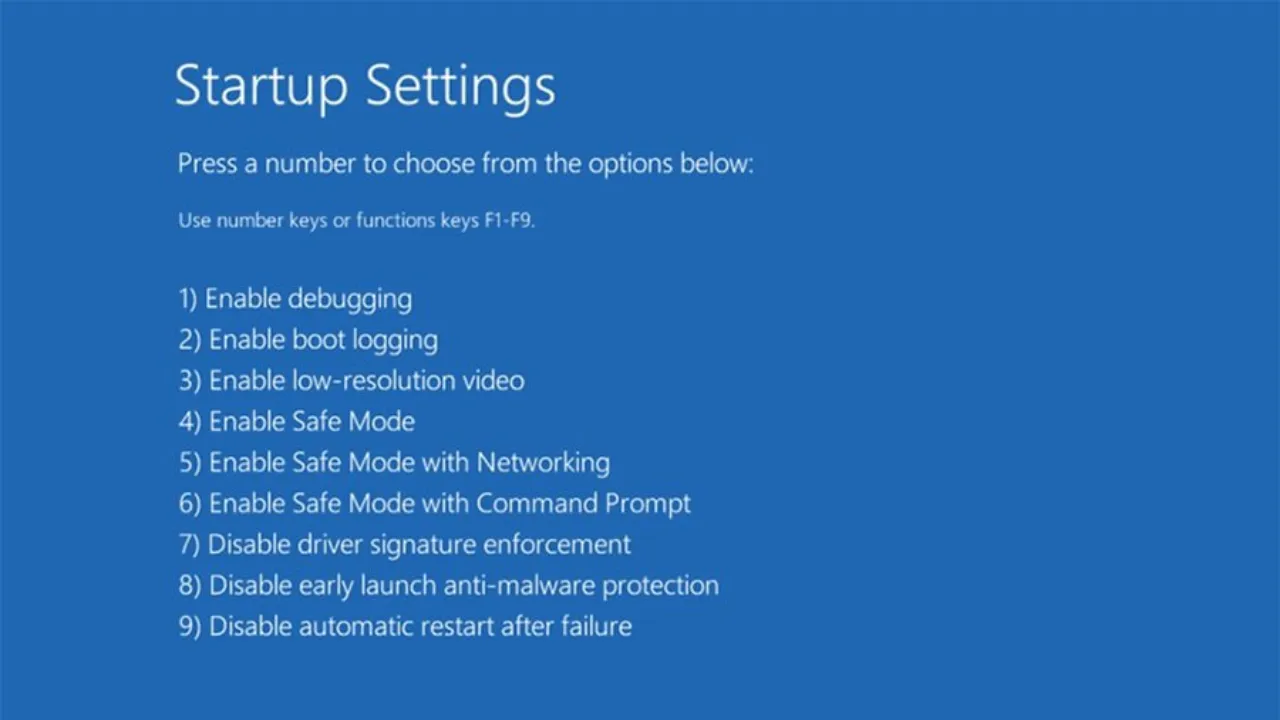
If your device is encrypted, you’ll need your BitLocker recovery key.
If the keyboard works in Safe Mode, that suggests a third-party service or driver is creating the problem. If it still doesn’t work, but did in BIOS, the problem might be with Windows system files or a lower-level driver. If the same keys don’t work anywhere, it’s likely a hardware problem. You can also try a clean boot to identify the conflicting startup service more precisely. Just re-enable services in groups until the keyword not working issue returns.
16. Use Recovery Only When the Timing Supports It
Recovery is a good option when your keyboard was working fine until a specific software, update, or configuration event.
Windows
Possible options include:
- Uninstalling a recent quality update.
- Rolling back the affected driver.
- Using System Restore.
- Repairing Windows through its recovery options.
Back up important data first. Do not reset Windows merely because one key is physically broken.
macOS
Safe Mode helps you identify the software that creates startup issues. Delete recent keyboard remappers, low level utilities, or extensions that might conflict with the system. You can reinstall macOS to fix problematic system files without wiping your personal data, but you should still keep a backup just in case.
Chromebook
Back up your local files before initiating a Powerwash. This process clears persistent software corruption and account-level conflicts. If your notebook’s keyboard won’t type during startup or in the Diagnostics tool, a Powerwash is unnecessary.
17. Repair or Replace the Keyboard Assembly
Service is justified when:
- The built-in keyboard fails in BIOS, UEFI, or preboot diagnostics.
- The same keys fail in every operating system and application.
- Liquid entered the keyboard.
- Multiple keys share a dead row or column.
- The keyboard and touchpad stopped after a drop impact or previous repair.
- A swollen battery warped the frame.
- A hardware error code points to the keyboard.
- Driver, settings, and update checks produce no change.
The fix can involve reseating a ribbon cable, cleaning up spills, swapping the keyboard, replacing the palm rest, or fixing the mainboard. Some laptops allow the keyboard to be changed separately. Others have it riveted to the case, so you have to replace the whole palm rest assembly.
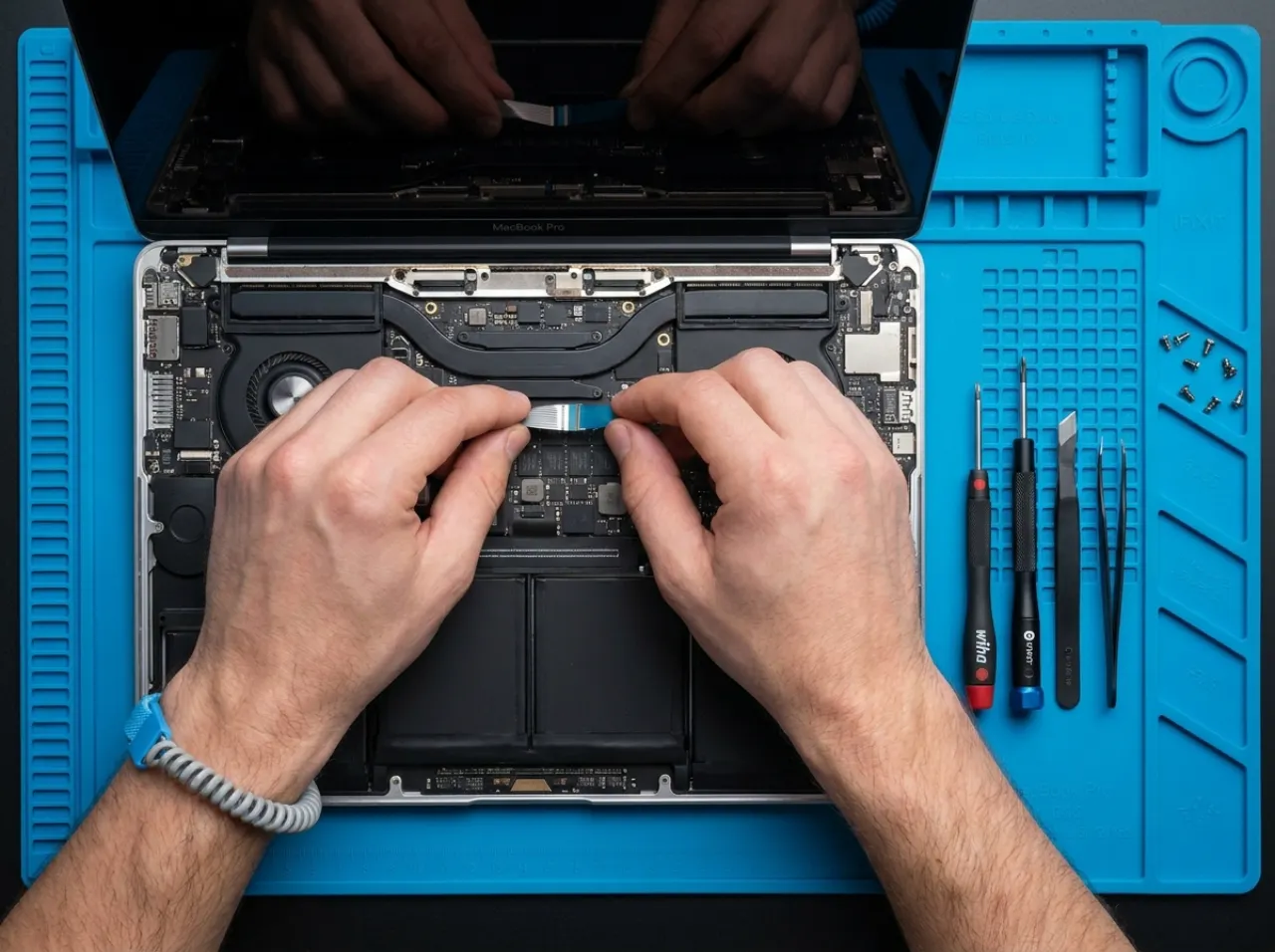
Before you open the machine:
- Check warranty and accidental-damage coverage.
- Find the exact model’s service manual.
- Back up the device.
- Disconnect physical battery power before working with internal keyboard connectors.
- Follow ESD safety precautions.
- Capture photos of how cables are routed and connector latch positions.
Follow the official manual instead of generic repair videos. Cable latches break easily, and they open in different ways depending on the model.
REPAIR DECISION BOX
Replace one key mechanism when a single keycap or scissor clip is damaged and the electrical switch still responds.
Replace the keyboard when rows, columns or multiple switches fail.
Inspect the board and connectors after liquid, impact or simultaneous keyboard-and-touchpad failure.
Stop using the computer when the keyboard deck has risen because of battery expansion.
How to Fix Dell Laptop Keyboard Not Working
- Use the SupportAssist tool: Open Dell SupportAssist, go to Troubleshooting > I want to check a specific piece of hardware > Keyboard, and run the guided test, which taps each key in sequence and flags the ones that don’t register.
- BIOS keyboard test on boot: Restart the laptop and press F2 repeatedly as the Dell logo appears to enter BIOS setup, then check if keys respond there.
- Drivers and BIOS by service tag: Go to Dell.com/support, enter your service tag (found on the bottom of the laptop or via Dell SupportAssist), and download the latest chipset, input device, and BIOS updates listed particularly for your model.
- 2-in-1 and convertible Dell models: Check if the laptop is inadvertently in tablet mode, as this setting intentionally disables the physical keyboard even when the desktop interface is active.
For more in-depth guidance, refer to Dell’s official support page, which provides a detailed walkthrough of the BIOS-level testing process and the SupportAssist diagnostic utility.
Related: How to Fix Laptop Screen Flickering Issue
How this Guide was Checked
The troubleshooting sequence was checked against the current support paths and diagnostic guidance for:
- Windows 11 keyboard settings, Windows Update, Device Manager, Safe Mode and recovery.
- macOS Tahoe 26 accessibility settings and Apple Diagnostics.
- Current ChromeOS keyboard settings, Diagnostics, and hardware reset.
- Dell SupportAssist and laptop keyboard guidance.
- HP PC Hardware Diagnostics and notebook keyboard guide.
The logic relies on four repeatable observations:
- Preboot test: Does input work before the operating system loads?
- Substitution test: Does a known good external keyboard work?
- Pattern test: Is the failure one key, one electrical group, whole board, or only special keys?
- Isolation test: Does the fault persist in another application, account, Safe Mode, or hardware diagnostic?
We don’t make any claim that one physical test laptop represents every model. Since things like key design, firmware menus, resets, and cable layouts vary across different brands’ laptops, always check your specific service manual first.
Frequently Asked Questions
Why is my laptop keyboard not working but the mouse is?
The mouse and keyboard are separate input devices, so a working mouse doesn’t rule out a keyboard problem. If the touchpad or external mouse works normally, use it to open Windows settings, Device Manager, and the on-screen keyboard while you troubleshoot the built-in pad.
Can a malware infection disable my built-in laptop keyboard?
Yes. Specific keyloggers, rogue rootkits, and corrupted input hooking spyware can block raw hardware interrupts to divert keystrokes or suppress input entirely. Run a deep system scan using Windows Defender or dedicated anti-malware software to eliminate malicious drivers that might be interfering with your input stack.
Why does my keyboard type numbers instead of letters?
It happens when Num Lock is enabled on the embedded numeric keypad on compact laptop keyboards. Press the model’s Num Lock combination, often Fn + a key marked NumLk, and check the manufacturer’s documentation.
Why must I hold a key before it appears?
Disable Filter Keys in Windows or Slow Keys in macOS accessibility settings. Both can delay or ignore normal short presses.
Why is my laptop keyboard typing by itself?
Unexpected characters or repeated keystrokes can come from a stuck key, debris beneath a keycap, liquid damage, or a failing keyboard. External software can also generate input, but test the keyboard in BIOS or pre-boot diagnostics first.
Can overheating cause a laptop keyboard to stop working?
It can, though it’s less common than driver or debris issues. Excess heat near the motherboard can result in the embedded controller to behave unpredictably, temporarily dropping keyboard input. If the keyboard only fails during heavy use or after the laptop overheats, check for blocked vents or a failing cooling fan.
Can I use an external keyboard permanently?
Yes, provided the laptop has no liquid damage, battery swelling, or broader electrical fault. An external keyboard is a practical workaround for a worn internal keyboard, though it does not resolve the underlying defect.
Is it safe to remove a laptop keycap?
Only when the manufacturer’s service information confirms that the keycap is removable and explains the mechanism. Laptop scissor clips are fragile, and larger keys use stabilizers that are difficult to refit. Warranty service is safer for current devices.
Should I update the BIOS to fix the keyboard?
Only when the update applies to the exact model and the release information or manufacturer explicitly recommends it for your model to fix keyboard bugs. Use stable AC power and follow the OEM instructions. Since a botched BIOS update can brick your machine, only go this route as a last resort after you’ve tried other solutions.
How much does laptop keyboard repair involve?
The work varies by construction. Some keyboards are removable after releasing a few screws and a ribbon cable. Others are integrated into the palm rest and require extensive disassembly. Liquid damage can require board-level inspection beyond just a replacement.
Sources
- HP — Swelling or deformation of notebook battery
- Dell — Electrical safety and liquid-spill precautions
- Apple — If your Mac doesn’t respond to key presses
- HP — Notebook keyboard troubleshooting
- Google — Use Diagnostics to troubleshoot a Chromebook
- Apple — Use Apple Diagnostics to test your Mac
- Apple — How to clean a MacBook keyboard
- Microsoft — Mouse and keyboard problems in Windows
- Microsoft — Windows accessibility keyboard shortcuts
- Google — Use your Chromebook keyboard
- Google — Reset Chromebook hardware
Microsoft — Windows startup settings and Safe Mode
Did this fix your issue?
Let us know. Your feedback helps other readers find the right solution.
Great! What solved it for you?
We read every response. Email is optional and never shared.
Sorry to hear that. What happened when you tried?
Leave your email and we will personally help you fix it.