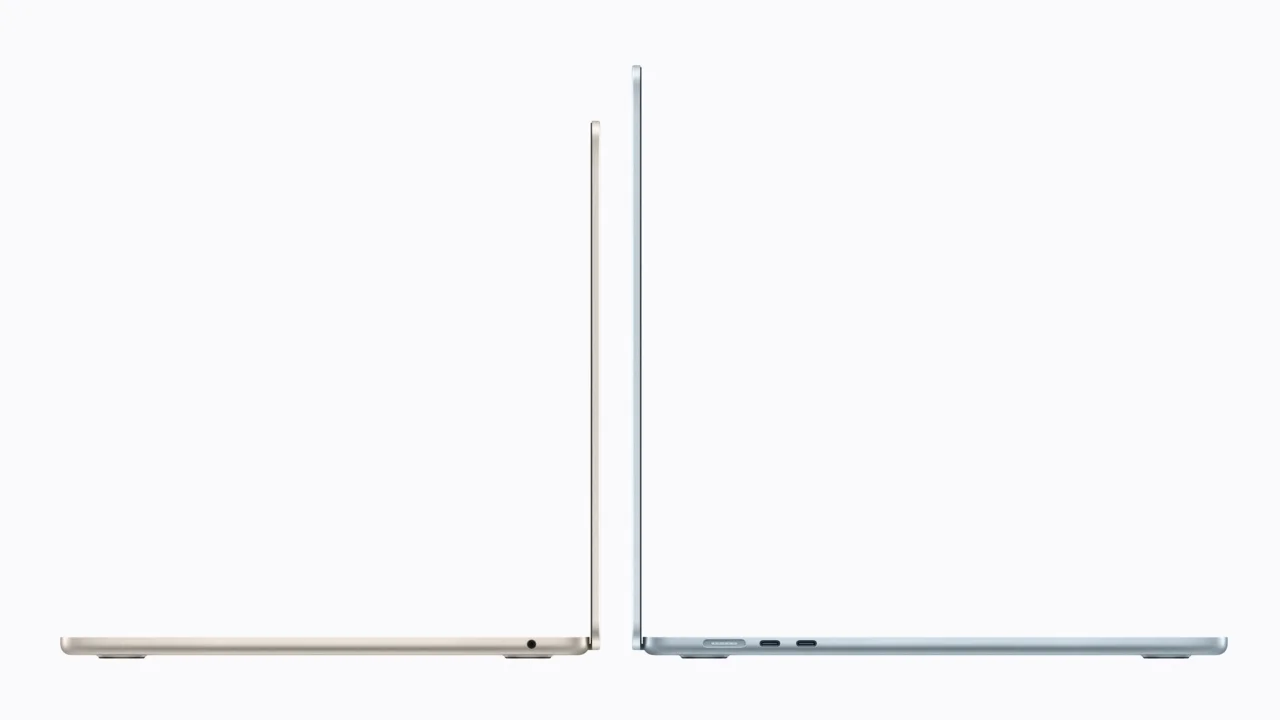
Apple has refreshed the MacBook Air and MacBook Pro series with its latest M5 silicon, which introduces fast and powerful CPUs, upgraded AI hardware, and new wireless connectivity. Though it also brings higher price tags. The headline is fast silicon across the board, but the fine print that shoppers need to pay attention to is that every model in both lineups costs more than it did a year ago.
The 13-inch MacBook Air now starts at $1,099, up $100 from last year’s $999 entry price. The 15-inch model jumps from $1,199 to $1,299. Apple has said that both models now ship with 512GB of storage as standard, up from the 256GB base config on last year’s MacBook Airs. Upgrading that much storage on the old notebook would’ve cost you an extra $200, so by this math, you’re actually ahead, given you wanted the extra space.
The storage bump is real value. The question is whether every buyer needed 512GB, or if Apple just made the decision for them.

The M5 chip is a legitimate step up, which Apple introduced last October. It brings a 10-core CPU with up to a 10-core GPU option. For AI-specific workloads, the company claims the new MacBook Air is four times faster than the M4 and nearly 9.5x faster than the one equipped with M1 — the latter figure being more of a reminder that many people still use older hardware. Hence, a direct year-over-year comparison isn’t the best way to look at it.
M5 Pro and M5 Max Come to the 14 and 16-Inch
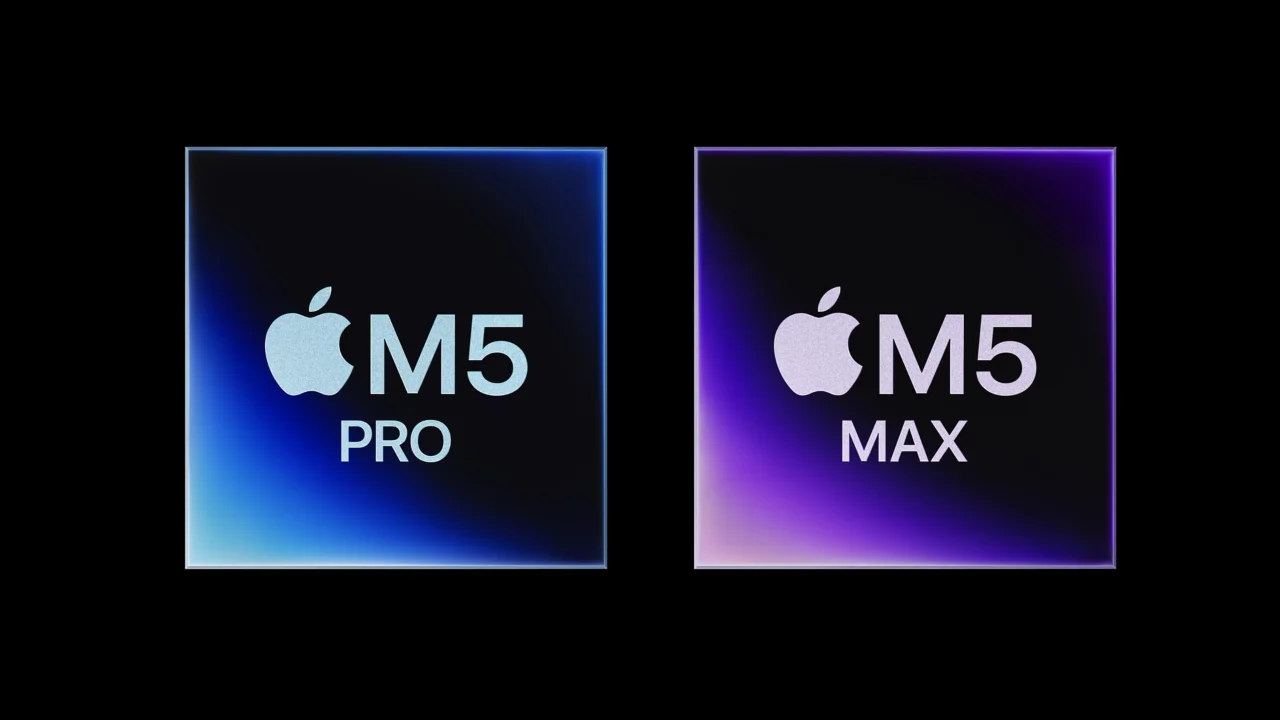
The big news for pro users is the arrival of the M5 Pro and M5 Max chips in the 14-inch and 16-inch MacBook Pros. While Apple had already integrated the base M5 into the 14-inch MacBook Pro in October, the more powerful Pro and Max variants for maximum performance are being launched for now.
Both chips feature an 18-core CPU architecture that Apple says is built for heavy multithreaded work. You get six high-performance super cores paired with 12 efficiency cores. Apple claims this setup delivers 30% better performance on pro workloads than what you’d see with the M4 Pro and M4 Max chips. The logic is intelligent enough to handle demanding tasks and, at the same time, preserve battery life. The super cores activate to deliver maximum power for tasks like video rendering or code compilation, and the efficiency cores take over during light activities.


The GPU story is just as aggressive. The M5 Max supports up to a 40-core GPU, and Apple is touting up to 50% better graphics performance than the M4 generation. “Both chips also bring up to a 50% increase in graphics performance compared to M4 Pro and M4 Max, enabling motion designers to work with complex 3D scenes in real time and VFX artists to preview effects instantly,” Apple says.
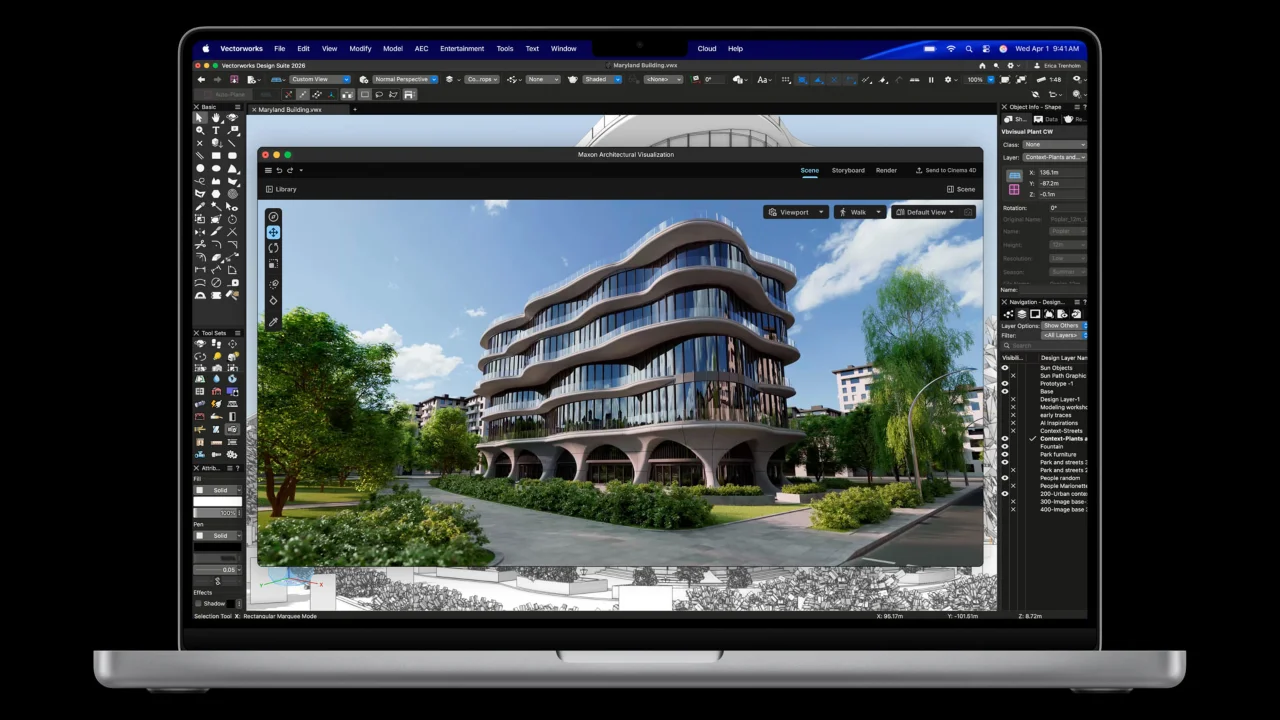
On the AI front, which the company has heavily leaned into across all its silicon, both the Pro and Max chips contain a 16-core Neural Engine and can run large language models locally up to four times faster than their predecessors. Image generation on the device gets a similar speed bump. Apple is targeting these new laptops at developers, photographers who work with large RAW libraries, and engineers who run 3D simulations. Battery life tops out at 24 hours on the Pro models.
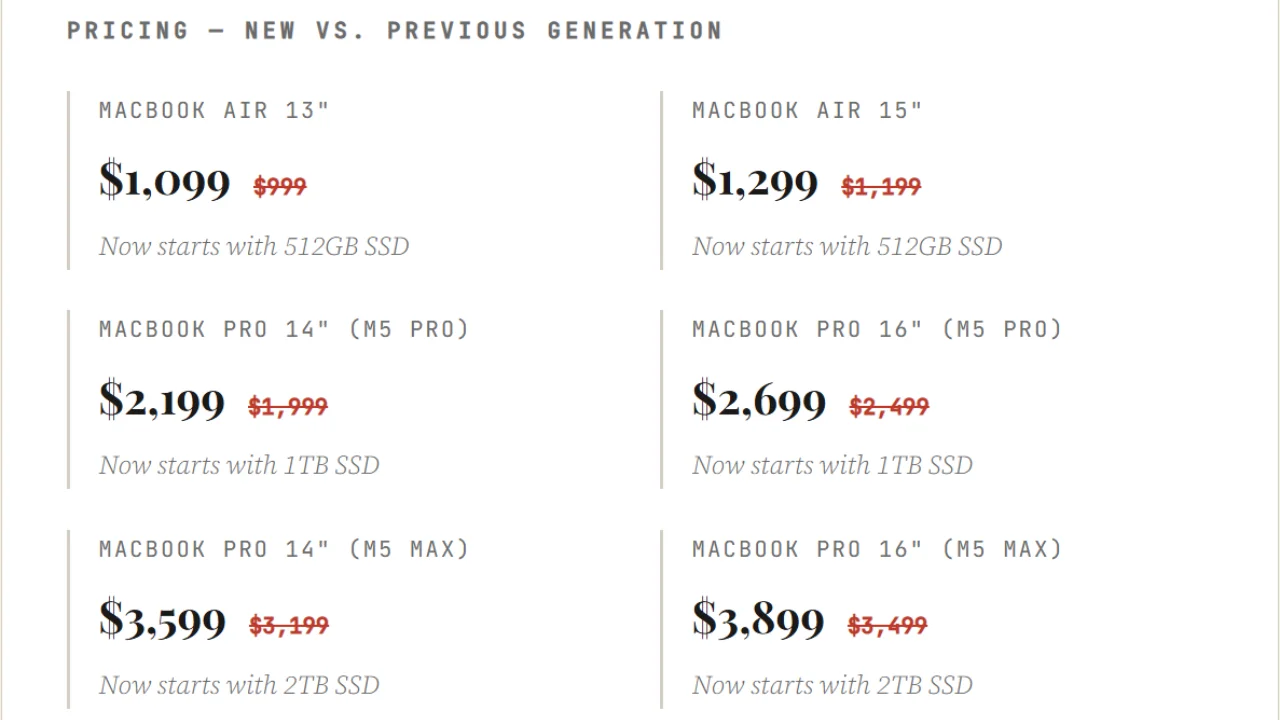
Just like the Air, the Pro models have ditched lower storage tiers. The M5 Pro now starts at 1TB, and the M5 Max starts at a beefy 2TB. While the “buy-in” price is higher, you’ll get the storage you likely would have paid for anyway.
The $200 increase on the M5 Max models stings most; a $400 jump on the 14-inch configuration is a big ask for buyers who were already stretching budgets. Apple thinks that the storage gain compensates for the high entry price, and for the MacBook Air, the arithmetic actually checks out. For MacBook Pro buyers who spend $3,600 or more, the value calculation gets fuzzy.
There’s no touchscreen on these machines, as was rumored. Apple might save that for later, maybe this year’s end. But the new MacBook Pros do have the same wireless chip as the Airs, so come with Wi-Fi 7 and Bluetooth 6. Pre-orders open today, March 4, and the first Mac units will hit shelves and doorsteps on March 11.