
Yes, you can connect AirPods to your PS4, but the console lacks native Bluetooth audio support right out of the box. You’ll need to use either a USB Bluetooth adapter, a Smart TV, or the Remote Play app. Every method has its own quirks, and I’ll walk you through all of them based on what I’ve seen work best in my experience.
Sony made a deliberate choice here. The PS4 has built-in Bluetooth for controllers, but audio is a different story. The issue comes down to latency, as current Bluetooth technology creates a delay between live action on screen and what you hear, a pretty terrible experience. That’s fine for music, but in gaming where even split-second counts, it’s problematic. The DualShock 4 controller already occupies the console’s Bluetooth bandwidth, so adding audio to the mix risks choppy performance.
Read: How to Connect AirPods to PS5
How to Connect AirPods to PS4
You can’t pair AirPods directly with a PlayStation 4 from the console settings. The system will find Apple earbuds but will refuse to connect. The only way around this is to bypass the PS4’s internal Bluetooth. You can do this with a USB dongle, the Remote Play app, or by routing sound through a smart TV. Of these methods, the USB adapter gives the most stable audio. Now you know the answer to “Can you connect AirPods to PS4?”, let’s work through all the methods you can use to make it possible.
1. USB Bluetooth Adapter
You need a USB Bluetooth transmitter that supports audio, and it will cost you around $10-$20. Plug-and-play models from brands like Avantree or UGREEN work well. Standard audio adapters will not carry your microphone signal. For voice chat, you’ll need an adapter kit that includes a 3.5mm mini-mic to connect with the base of your DualShock controller.
Note: Consider the USB adaptors with Bluetooth 5.0 or higher for better compatibility with new AirPods models. Some come with external antennas and low-latency codecs like aptX-Adaptive, which will help with audio quality.
Here’s how to set it up:
- Plug the Bluetooth adapter into one of the USB ports on your PS4 (front ports are better).
- Put AirPods in the charging case, then press and hold the setup button on the back of the case until the status light flashes white. That’s when earbuds enter pairing mode.
- Activate pairing mode on the adapter. Some do this automatically when plugged in; others need you to hold a button for a few seconds.
- Hold the AirPods near the adapter until the adapter’s LED confirms the connection.
- On your PS4, go to Settings > Devices > Audio Devices.
- Set the Output Device to your USB adapter (it’ll appear by name or as “USB Audio Device”).
- Set Output to Headphones to All Audio to route game sound and chat through the AirPods.
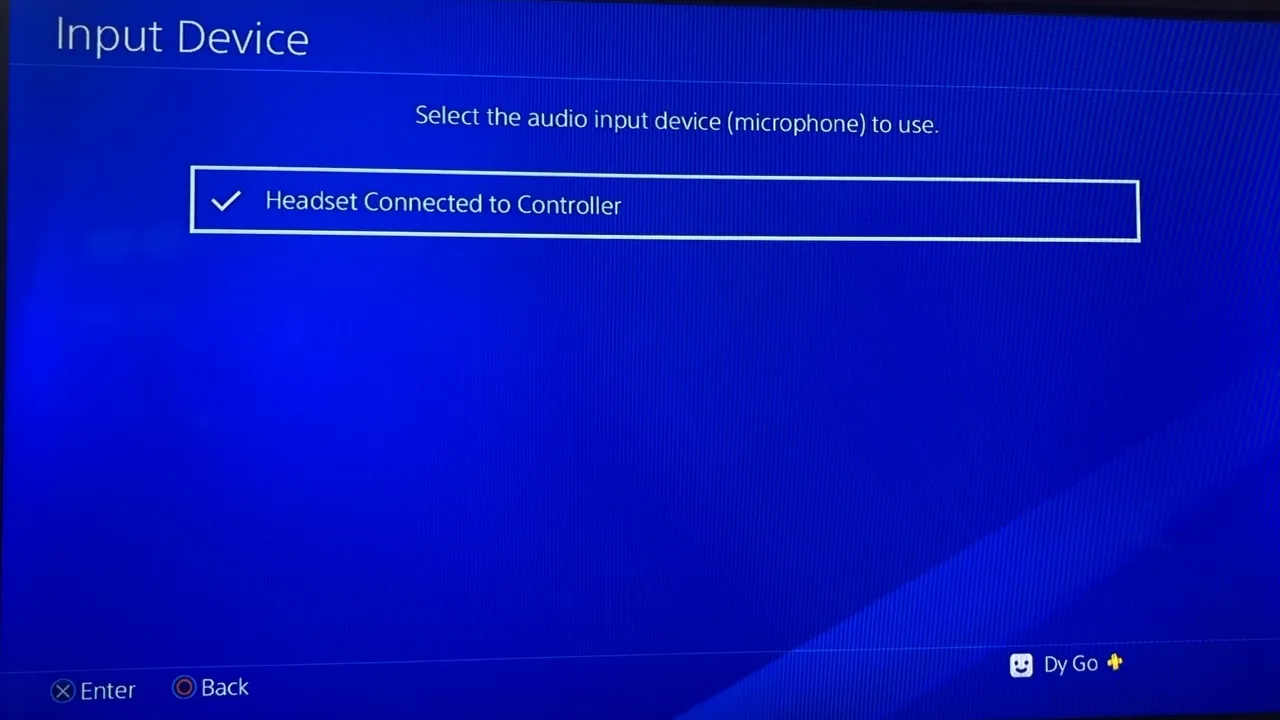
If you use GuliKit or a similar dongle with a mini-mic, set the Input Device to Headset Connected to Controller. With a good adapter like the Avantree DG60P, which has Bluetooth 5.3 and aptX Adaptive, the audio quality will be decent, and the lag will also be low enough that it won’t throw off the game.
2. Connect AirPods to PS4 via Smart TV
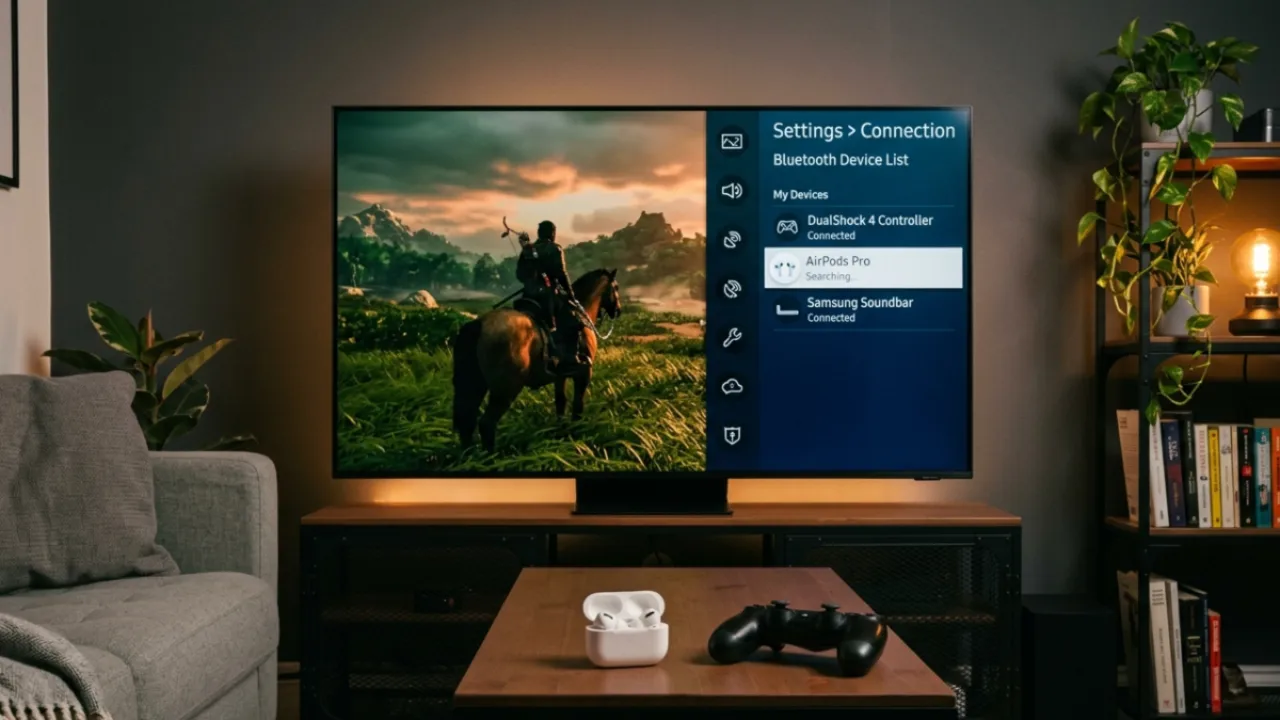
Modern smart TVs with built-in Bluetooth can act as the middleman. The PS4 sends the video and audio to the TV via HDMI, and the TV beams the sound to your AirPods over Bluetooth, which completely skips the PlayStation OS. The major downside is that you cannot use a mic at all with this setup.
- Make sure your PS4 is connected to your Smart TV as usual.
- Put your AirPods in pairing mode (press and hold the setup button on the case until the light flashes white).
- On TV, open its Settings. The exact menu varies by brand, but look for something like “Sound,” “Remotes & Accessories,” or “Bluetooth Devices.”
- Pick the option to add a Bluetooth device or accessory. Your AirPods should appear in the list of available devices.
- Once paired, your TV’s audio output must be set to Bluetooth, which you can usually find under Sound Settings > Sound Output > select Bluetooth or AirPods by name.
No audio lag in my experience, which is nice. The downside? You still can’t use the AirPods’ microphone for party chat—you’d need to link an external mic to your controller. Also, pairing can be finicky. Some TVs take a few attempts to recognize the earbuds, and you might need to re-pair them occasionally.
3. Use the Remote Play App
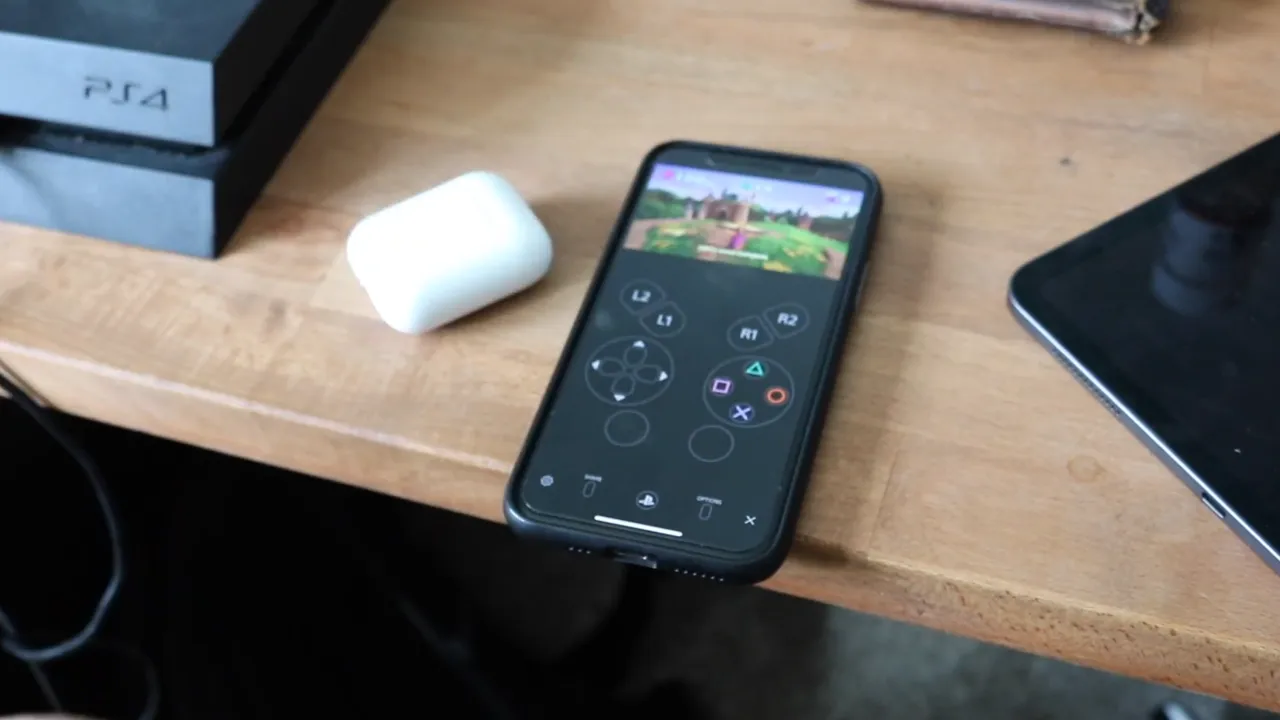
The Remote Play App works differently from the others. It streams the game to your phone, which then handles all the audio and sends it to your already paired AirPods. The biggest advantage here is that it’s the only way you can use your AirPods mic for voice chat. The drawback, though, is network dependence; a weak Wi-Fi signal can cause annoying audio lag.
- On PlayStation 4, go to Settings > Remote Play Connection Settings and check the box to Enable Remote Play.
- Download the PlayStation Remote Play app, free on both the App Store and Google Play.
- Connect AirPods to your phone via its standard Bluetooth menu.
- Open the app, sign in with your PSN account, and connect to PS4 (make sure both are on the same Wi-Fi). The app should automatically detect the console on the network.
- If it doesn’t auto-connect, go back into console settings under Remote Play and select Add Device to get a pairing code, then enter it in the app.
- Once paired, tap the microphone icon at the bottom-right of the app’s screen to enable voice chat through earphones.
- To adjust the mic volume, press the Share and PS buttons simultaneously to open the Quick Menu, then go to Sound Devices > Adjust Microphone Level.
What to Do If Your AirPods Won’t Connect
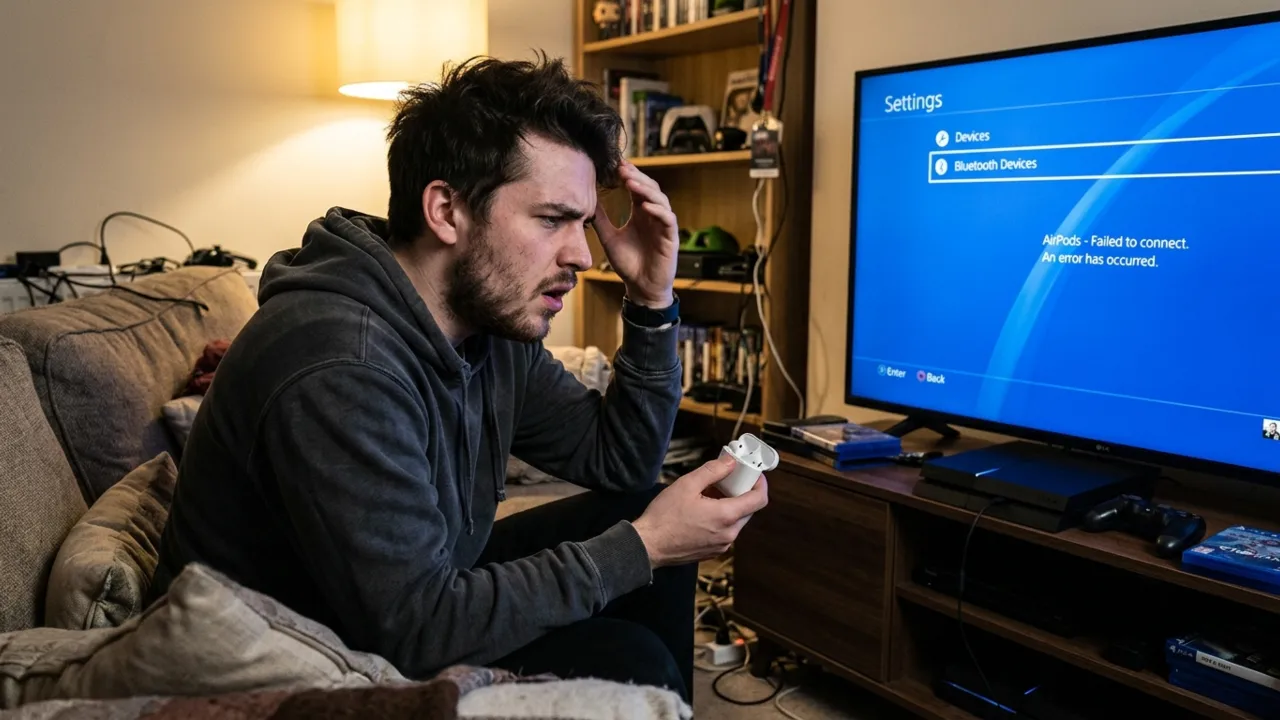
Hardware conflicts happen. When connections drop or refuse to pair with a dongle, the adapter might lack compatibility with Apple’s specific Bluetooth protocols. Verify the dongle supports at least Bluetooth 5.0.
Outdated firmware on the earbuds also causes sync failures. AirPods update automatically when charging near a connected Apple device. To force a check, connect them to an iPhone or iPad, go to Settings > Bluetooth, tap the “i” next to AirPods, and verify the firmware version. For audio delay on the Smart TV, check for firmware updates on the television or swap the HDMI cable.