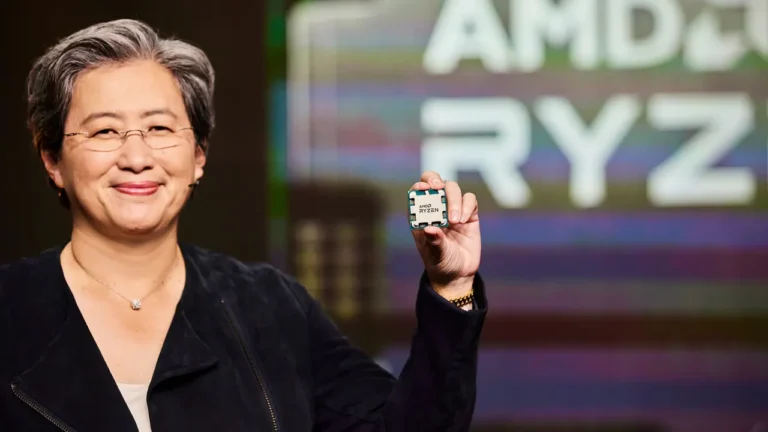
The PC market won’t collapse, but it’s not healthy either, and AMD knows it. As shipment forecasts soften and component costs remain very high, AMD’s CEO, Lisa Su, has shared her perspective on the PC industry, and it looks like Team Red isn’t overly optimistic about the client segment growth this year.
AMD Prepares for PC Market Turbulence as CEO Lisa Su Shifts Strategy Toward Enterprise AI
AMD’s latest earnings call has revealed that the consumer PC market has been shaky, and Team Red wants to hedge its bets accordingly. Between memory price hikes and general inflation, the enthusiasm for mainstream DIY builds has been dampened compared to the COVID-era boom.
“Even in that environment with the PC market down, we believe we can grow our PC business,” Su explained. The strategy is to focus on enterprise and premium segments while letting the budget consumer space sort itself out.
Talking about the current PC market, AMD’s CEO acknowledged that demand is under pressure. Inflation, memory pricing, and uneven refresh cycles are dragging down the total addressable market. Industry data backs that up, with IDC projecting reduced shipments across 2025.
Still, Su was clear that the company isn’t backing away from desktops. Instead, they plan to target high-end systems to grow within a limited market where margins and differences are strong. It means fewer entry-level bets and more focus on premium notebooks, business systems, and commercial deployments.
I think the PC market is an important market. Based on everything that we see today, we’re probably seeing the PC TAM down a bit just given some of the inflationary pressures of the commodities pricing, including memory.
Even in that environment with the PC market down, we believe we can grow our PC business. And our focus areas are enterprise. That’s a place where we’re making very nice progress in 2025, and we expect that into 2026. And just continuing to grow, you know, sort of at the premium, you know, higher end of the market.
– AMD’s CEO Lisa Su
Team Red believes that even in a down market, it can grow by targeting the premium tier. I see this as a distinct move away from the volume wars and toward high-margin stability. The lines are blurring where client products are being retooled to serve Enterprise needs.
The terms enterprise in the CEO statement possibly refers to Edge AI. The future roadmap will likely lean heavily into mobile solutions and powerful APUs. Products including Gorgon Point, Medusa Point, and the newly revealed Ryzen AI Halo mini-PCs are part of a future where AMD’s client chips will be built around local AI inference, security, and edge workloads. By fusing enterprise reliability with client performance, Team Red hopes to make its processors indispensable for the next generation of professional workflows.
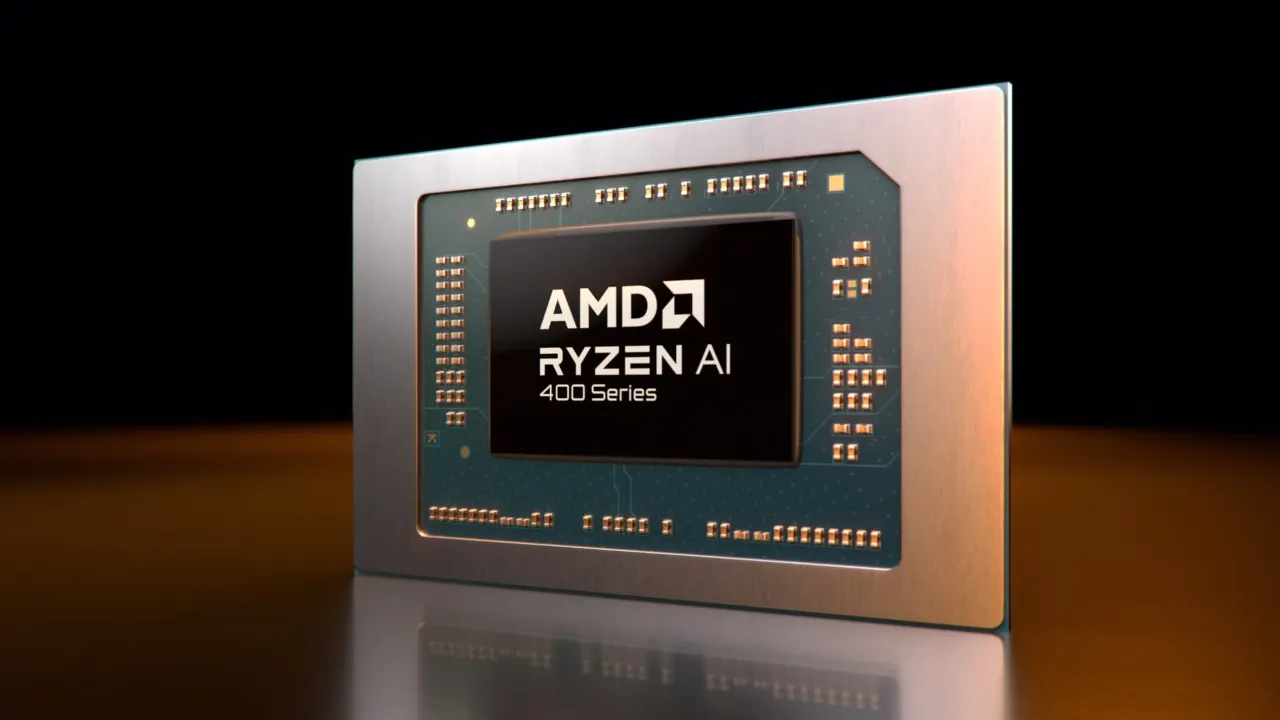
Financially, AMD’s client segment doesn’t look weak on paper. Revenue climbed 37% year-over-year to $3.9 billion, thanks to Ryzen CPUs and Radeon GPUs. That growth is mainly due to the product mix rather than the market being healthy overall. The company’s partnership with Xbox for custom silicon gives them another revenue stream that doesn’t depend on consumer desktop and laptop sales. While consoles are technically consumer devices, these custom silicon deals act like enterprise contracts—guaranteed volume and steady money that insulates AMD from the volatility of the DIY PC market.
With RDNA 5 pushed to the second half of 2027 and RDNA 4 expected to carry the lineup for many more quarters, AMD has limited room to make aggressive moves in the desktop GPU space. Short-term strategy or mobile-first launches around events like Computex might fill the gap, but a major consumer reset won’t arrive soon.
One thing no one can control is the memory supply. Ongoing shortages and high cost pressure have distorted PC plans across the industry. With memory still tight, high-volume, low-margin computers don’t make any sense for now. The effects of this imbalance could easily stretch into 2027 or beyond.